

Read the article here (external link).
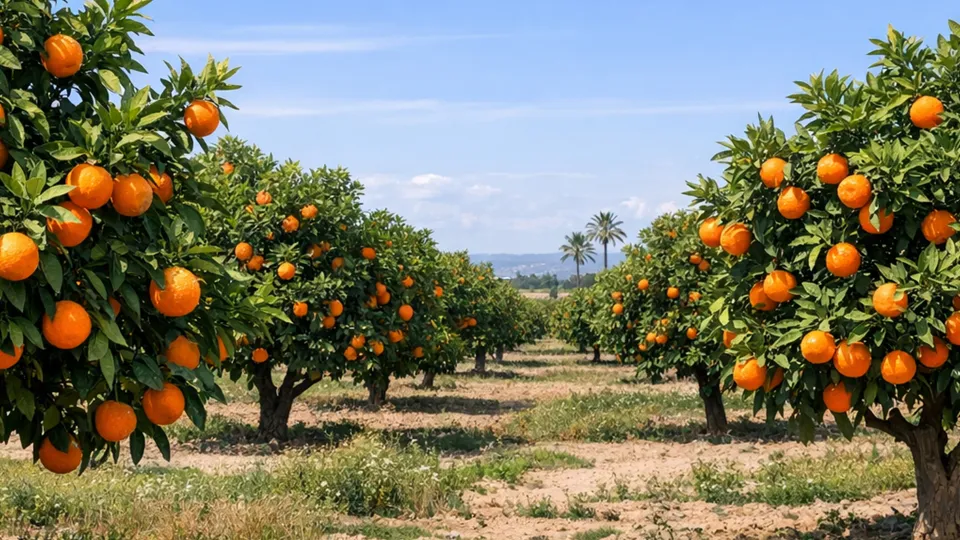
Citrus production is increasingly constrained worldwide by rising soil salinity, particularly in arid and semi-arid regions. In Tunisia, the expansion of saline soils represents a major abiotic stress limiting orchard productivity. The identification of salt-tolerant rootstocks has therefore become a priority, especially as alternatives to sour orange (SO, Citrus aurantium L.), which is highly susceptible to Citrus tristeza virus. In recent years, several outbreaks of the disease have been reported in the Cap Bon citrus-growing region, posing an imminent threat to the sustainability of citrus production in Tunisia. This study evaluated the salt tolerance of commercial cultivars (HER, MAR, WN, NH) grafted onto Citrus volkameriana Ten. & Pasq. (CV, Citrus aurantium × Citrus limon (L.) Burm.f.) and three Poncirus trifoliata hybrids (CC, C35, CTR) under irrigation water salinity ranging from 1.1 to 4.1 mS/cm and soil salinity between 1.8 and 3.8 mS/cm. Data were collected between 2020 and 2021 in five young citrus orchards (KHB, OSN, BKN, BSJ, CHK) located in the main citrus-producing region of Tunisia, with key physiological measurements conducted during the high-evaporation period. Salinity increased across most sites during summer 2021, affecting ion homeostasis, Na+/K+ selectivity, stomatal traits, photosynthetic performance, and growth. The highest leaf Cl− concentration (0.4 meq g−1 dry weight) was recorded in the sensitive HER/CC combination at the OSN site. Increased salinity at OSN was associated with a 0.86% reduction in canopy growth compared to BSJ. Rootstock tolerance was strongly linked to the ability to restrict Cl− accumulation in leaf tissues. Under higher salinity conditions, CV showed superior performance and represents a suitable alternative to SO.
About the author: Ronny Berndtsson