
Text: Rafah Barhoum
Nowruz, meaning "new day" in Persian, is an ancient, 3,000-year-old festival marking the Iranian New Year and the spring equinox (March 20/21).
Celebrating rebirth and the great victory of light over darkness, it is honored by over 300 million people across the Middle East, Central Asia, and the Caucasus.
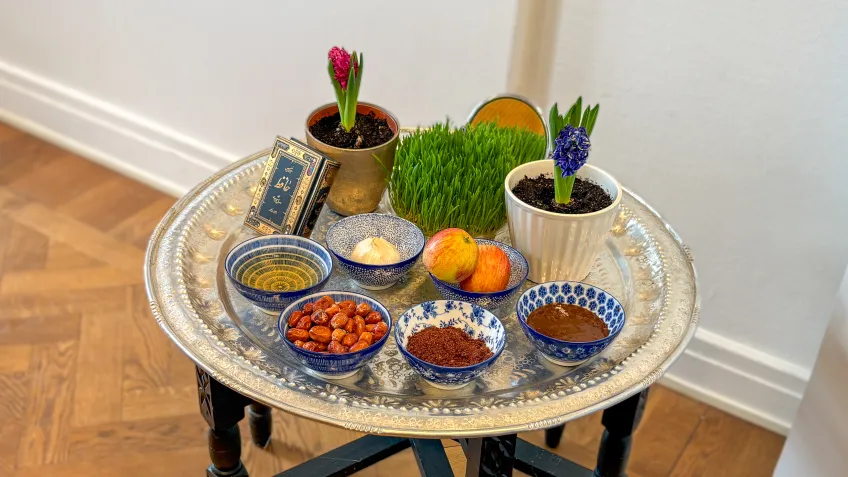
Haft Sin هفت سين / The seven symbolic items, each starts with the letter S سin Farsi
| 1 | Sabzeh سبزه | Wheat, barley, or lentil sprouts: symbolizing rebirth and growth. | |
| 2 | Samanu سمنو | Sweet pudding made from wheat: symbolizing sweetness and fertility. | |
| 3 | Senjed سنجد | Dried oleaster fruit: symbolizing love. | |
| 4 | Seer سير | Garlic: symbolizing medicine and health. | |
| 5 | Seeb سيب | Apple: symbolizing beauty and health. | |
| 6 | Somaqسُمّاق | Sumac: symbolizing the sunrise and new beginnings. | |
| 7 | Serkehسِركه | Vinegar: symbolizing age and patience. |
In addition to the above items, some families may also include additional items on their Haft-sin, such as:
Mirror: Symbolizing reflection and self-reflection.
Sonbol (hyacinth flower): Symbolizing Spring and the renewal of nature.
A book: Symbolizing spirituality and faith. Normally the Quran or one of Hafez Shirazi books. Hafez Shirazi is a Persian lyric poet and Sufi mystic
The items of Haft-sin can vary depending on the family and region, but they generally all represent good wishes and hopes for the new year.